



Principal Investigator Dr Ingrid Pearson and her team have been awarded funding through the AHRC Curiosity Award scheme to undertake pioneering interdisciplinary research to bringing accountable fidelity to the use of Additive Manufacturing in reproducing historical woodwind instruments. The project runs for 15 months from September 2026, in collaboration with the Open University and Cambridge Woodwind Makers.
Since 2011 Additive Manufacturing (AM, which includes 3D printing) been used to recreate a range of historical woodwind instruments. These cost-effective copies regularly appear in professional musical contexts but their creation is largely self-contained, lacking accountable methodological and systematic rigour. Furthermore, associated protocols created exclusively for visual and archival documentation are outdated, and unsuitable for reproducing instruments for performance, recording or public engagement.
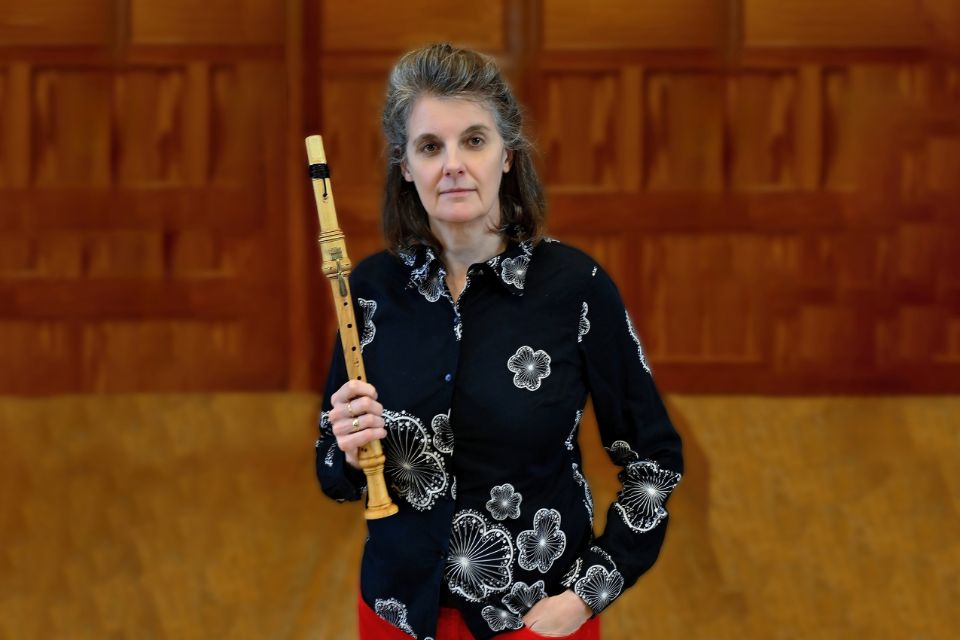
This project will create a rigorous methodology to ensure the creation of accurate playable replicas of historical woodwinds. We will use two modern copies of an historical chalumeau as control instruments. Invented in 1680s Nuremberg, the chalumeau was a musical game-changer, prefiguring the development of the clarinet and the saxophone. The size, shape and design of chalumeaux make them an ideal subject for technological scrutiny, particularly given the importance of the acoustical properties of their internal air cavity. Interchanging our modern copies with newly printed AM duplicates enables us to undertake a series of interdisciplinary experiments, testing materials and technologies using empirical methods and player interaction. Combining micro-CT scanning with the latest non-contact 3D optical metrology our project will be the first to generate micron precise and rigorous measurements.
Playable, affordable and accurately produced AM copies will enable a far greater understanding of historical woodwinds, benefitting musicians and their diverse audiences, instrument makers, historians, acousticians and other individuals. Collectors, museums and the Cultural Heritage sector will gain a new tool for sharing and disseminating legitimate copies, thus transforming AM practices across a wider range of artefacts, historical and contemporary, fostering the dissemination of more sustainable cultural heritage in the digital age.